Bolsa Chica History
Prehistory - 1850s
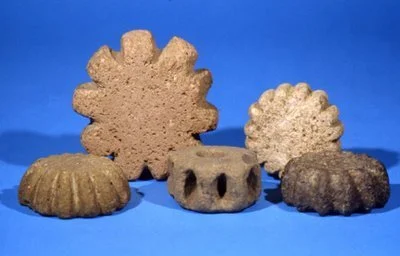
First Inhabitants of the Bolsa Chica area: When farmers first plowed the ground on the Bolsa Chica Mesa in the late 1800’s, they unearthed “cogged stones” or “cog stones. ” Made between 6000 and 3500 B.C., hundreds of cog stones have been found at Bolsa Chica. Nothing is known of the prehistoric people who made them. They were unrelated to later inhabitants of the Bolsa Chica, and though there are many theories, no one knows for certain how they used the stones.
Before the arrival of Europeans, more recent Native Americans in Bolsa Chica were of Shoshone linguistic stock. One group’s land, the Tongva, extended from northern Orange County into Los Angeles County, and the other, the Acjachemen settled primarily in south Orange County. They lived in seasonal settlements on Bolsa Chica and Huntington mesas.
1771 - San Gabriel Mission was established. The missionaries coerced the Native Americans to become laborers and to convert to the European religion.
1784 – A vast land grant, which included the Bolsa Chica wetlands, was given to Manuel Nieto by the King of Spain.
1821 - Mexico became independent from Spain.
1834 - The Missions were secularized. The Nieto land grant was divided. 20 ranchos existed in what has since become Orange County. Rancho Las Bolsas was given to Nieto’s daughter-in-law, Catarina Ruiz. A smaller grant, Rancho Bolsa Chica (little pocket or girl’s purse), was given to Joaquin Ruiz, the brother of Nieto’s daughter-in-law.
1841 - American settlers began entering California and quickly began dominating the economic and social fabric of the region.
1848 - Following the war between the U. S. and Mexico, Mexico released its claim to much of the American Southwest, including California, to the U.S.
1850 - California became the 31st state on September 9.
1850s - Abel Stearns became the owner of Rancho Bolsa Chica. Stearns used the land for farming (celery, potatoes and lima beans) and grazing (cattle and sheep).

1899
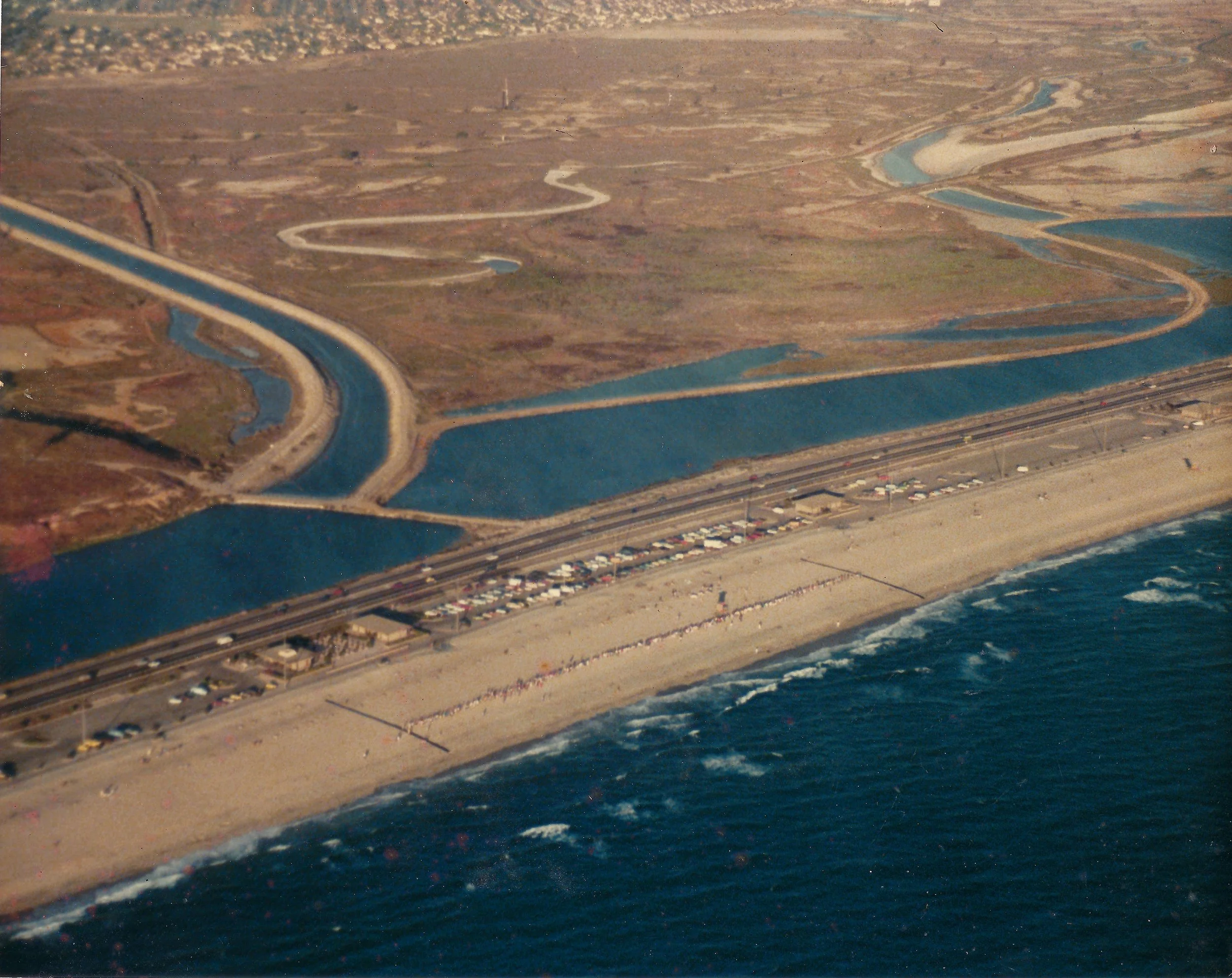
In 1899, a small portion of the original Rancho La Bolsa Chica that bordered the coastline, about 2,000 acres, was sold by the trust to a group of Los Angeles businessmen for a duck hunting preserve. The string of wetlands which extended from San Pedro to Newport Beach attracted enormous numbers of ducks each season and several hunting clubs had established preserves in these wetlands. The Bolsa Chica Gun Club built a hunting lodge and several smaller service buildings on the Bolsa Chica Mesa overlooking Bolsa Bay (see photograph). The Gun Club membership roster contained names such as Torrance, Slauson, Banning, and Huntington. The Bolsa Chica Wetland was an estuarine habitat, meaning sea water from a tidal opening near what is now the corner of Pacific Coast Hwy and Warner Avenue entered the wetland and mixed with freshwater that came down the Freeman Creek from farm overflow and artesian wells inland. The duck hunters (and apparently the ducks) preferred to have it all fresh water and avoid the ebb and flow of the tides, so the Bolsa Chica Gun Club ordered a dam built across a narrow portion of the channel in outer Bolsa Bay to prevent sea water from entering the wetlands. However, flap gates were included in the dam to allow excess water to drain from the wetland. The reduction of tidal flow in and out of the Bolsa Chica soon caused the inlet to silt over, preventing the excess water from draining out of the wetlands. A new channel was dredged from outer Bolsa Bay to Anaheim Bay to allow drainage. That channel is now spanned by the bridge on Warner Avenue. The dam would prevent tidal flushing of the Bolsa Chica wetlands for nearly 110 years.
On October 17, 1899, the Bolsa Chica Gun Club opened its doors for the first time and was frequented by the likes of Babe Ruth and Teddy Roosevelt. The duck club lodge was the finest in the region, constructed of redwood and cedar. The interior was rustic, with massive river stone fireplaces and roughhewn furniture. The two wings of the clubhouse housed a total of 20 bedrooms with dormer windows, many of which looked out over the wetland, sand dunes, and the Pacific Ocean beyond.

1920s & 1930s
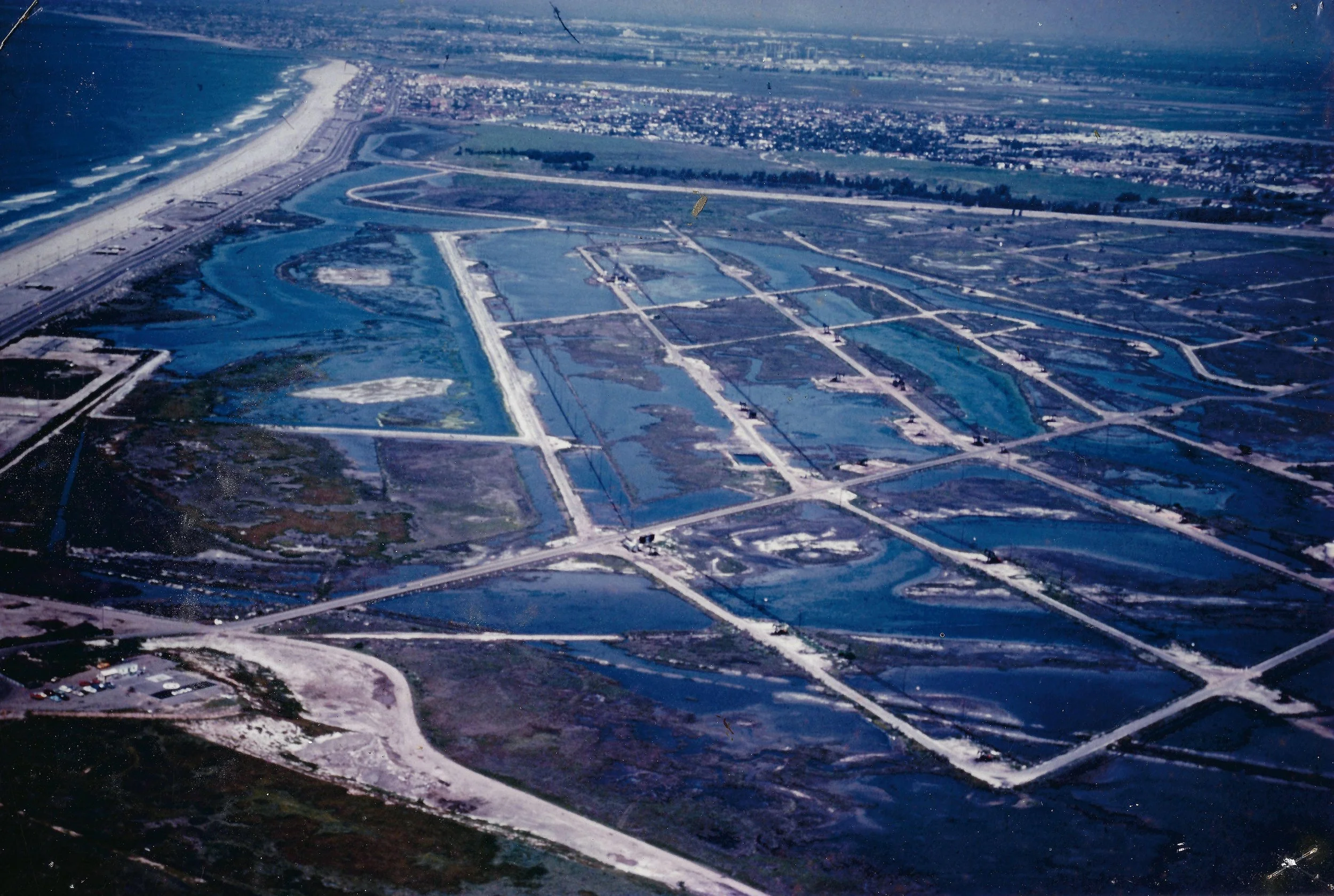
Oil was discovered in nearby Huntington Beach in 1920, and the Bolsa Chica Gun Club signed an oil and gas lease with Standard Oil Company of California to drill on the Upper Bolsa Chica Mesa. Gun club members refused to allow oil drilling in the wetland for fear it would interfere with their duck hunting. But the stock market crash of 1929 and the depression of the 1930’s gave gun club members the incentive to open the entire wetlands to oil exploration. In 1940 members signed a lease with Signal Oil and Gas Company to begin drilling in the wetland. Soon raised service roads crisscrossed the wetland to provide dry access to the wells that were scattered over the 1,300 acres of lowland.

1940s & 1950s
To provide defense of Los Angeles Harbor and the Huntington and Bolsa Chica oil fields during the Second World War, the U.S. Army established a coastal defense artillery battery on the Bolsa Chica Mesa. Long range gun emplacements were constructed on the bluff overlooking outer Bolsa Bay (remnants are still there, just north of the interpretive display). Massive concrete bunkers to house personnel and store munitions were built in the upper bench of the mesa. Some of the bunkers were removed in 1998 in preparation for residential development on the mesa. The battery headquarters was housed in the gun club lodge. At war’s end, the artillery was removed and the property was returned to the gun club members.
In the 1950s, the beach below the Bolsa Chica had become known as Tin Can Beach because of the piles of trash (300 tons by one estimate) that had been discarded by campers. The state purchased the beach in 1961 and established Bolsa Chica State Beach, one of the most popular beach attractions in California.

1964-1973
1964‑72 - FEASIBILITY STUDY OF A SMALL CRAFT HARBOR - Congress authorizes US Army Corps of Engineers and Orange County to study the feasibility of a small craft harbor at the Bolsa Chica.
1970 - Signal Bolsa Corp. buys the surface rights to 2000 acres from the Gun Club heirs for $20 million.
The State claims 528 of the lowland are historic tide and submerged lands. Signal contends these acres are free from the State's claim since they were conveyed into private ownership by a Mexican rancho grant.
An Inter‑Agency Task Force is formed and includes the Departments of Fish and Game, Navigation and Ocean Development, and Parks and Recreation plus the Attorney General's office and State Lands Commission. Dillingham Environmental Company prepares a three‑volume report entitled "Environmental Evaluation of the Bolsa Chica Area" which serves as environmental baseline for subsequent planning.
1972 - PROPOSITION 20 PASSES - Alarmed that private development was cutting off public access to the shore, and catalyzed by a huge oil spill off the coast of Santa Barbara, Californians in 1972 rallied to “Save Our Coast” and passed a voter initiative called the Coastal Conservation Initiative (Prop 20). Prop 20 created the California Coastal Commission to make land use decisions in the Coastal Zone, while additional planning occurred.
1973 March - SETTLEMENT AGREEMENT SIGNED - The State (Governor Reagan) and Signal sign the "Boundary Settlement and Exchange Agreement Regarding Lands in the Bolsa Chica Area, Orange County, California." The State acquired 327.5 acres for the public, to be managed by Dept. of Fish and Game, and deeds 1,700 acres to Signal in fee. The agreement includes a two-phase wetlands project, with Phase 2 dependent upon the State's involvement in the development of a marina and navigable ocean entrance.

1976-1979
1976 January - AMIGOS DE BOLSA CHICA FORM - After many months of planning and studies, local chapters of the League of Women Voters, American Association of University Women and members of the community form the Amigos de Bolsa Chica. Its mission is "to advocate the preservation of the Bolsa Chica and encourage public acquisition and plan to restore it to its natural marsh state surrounded by open space." The new organization holds its first public meeting at the beginning of the year.
1976 - CALIFORNIA STATE LEGISLATURE PASSES THE COASTAL ACT - The Coastal Act makes the Coastal Commission a permanent agency with broad authority to regulate coastal development. The Coastal Act guides how the land along the coast of California is developed or protected from development. It emphasizes the importance of the public being able to access the coast, and the preservation of sensitive coastal and marine habitat and biodiversity. It dictates that development be clustered in areas to preserve open space, and that coastal agricultural lands be preserved. It prioritizes coastal recreation as well as commercial and industrial uses that need a waterfront location. It calls for orderly, balanced development, consistent with these priorities and taking into account the constitutionally protected rights of property owners.
1977‑78 - PHASE 1 OF CALIFORNIA DEPARTMENT OF FISH AND GAME'S WETLAND RESTORATION - Levees are built to enclose 150 acres of the 300-acre State parcel, and the dam which has been closed since the turn of the entry is reopened to restore muted tidal influence. Public service facilities (2 parking lots, walk bridge, restrooms and signs) are built. Two sand islands (1.8 and 1.6 acres) are created as nesting habitat for endangered California Least Tern.
1979 February - AMIGOS FILES LAWSUIT - Amigos de Bolsa Chica filed suit in the Superior Court of the State of California. The complaint is for:
• Injunction and civil penalties for filling, diking, and degradation of wetlands;
• A determination that the Bolsa Chica Land Trade (Boundary Settlement and Exchange Agreement Regarding Lands in the Bolsa Chica Area, Orange County, California) violates the California Constitution;
• A determination that California Public Resources Code 6307 is unconstitutional;
• An injunction to restrain the construction of dwellings;
• Civic penalties for violation of the California Coastal Act; and
• An accounting of all oil revenues derived from public trust tidelands.
1980s
1982 October - AMIGOS LAWSUIT BEFORE THE APPELLATE COURT - Attorneys from the Amigos (Lynda Martyn and Hal Bohner) and the National Audubon Society (Palmer Madden) speak before the State Appellate Court that the Bolsa Chica Lowlands, historically belong to the public and the 1973 Land Trade should be overturned. After reviewing the record, the Appellate Court agrees with the Superior Court ruling that the agreement between State and Signal cannot be contested because the one‑year statute of limitation had expired.
1983 April - AMIGOS LAWSUIT CONTINUES TO THE CALIFORNIA SUPREME COURT - Protesting that statute of limitations does not apply, the Amigos file their lawsuit to the State Supreme Court with "friends‑of the‑court" briefs by National Audubon, Sierra Club, and League for Coastal Protection. In September, the case is accepted for hearing.
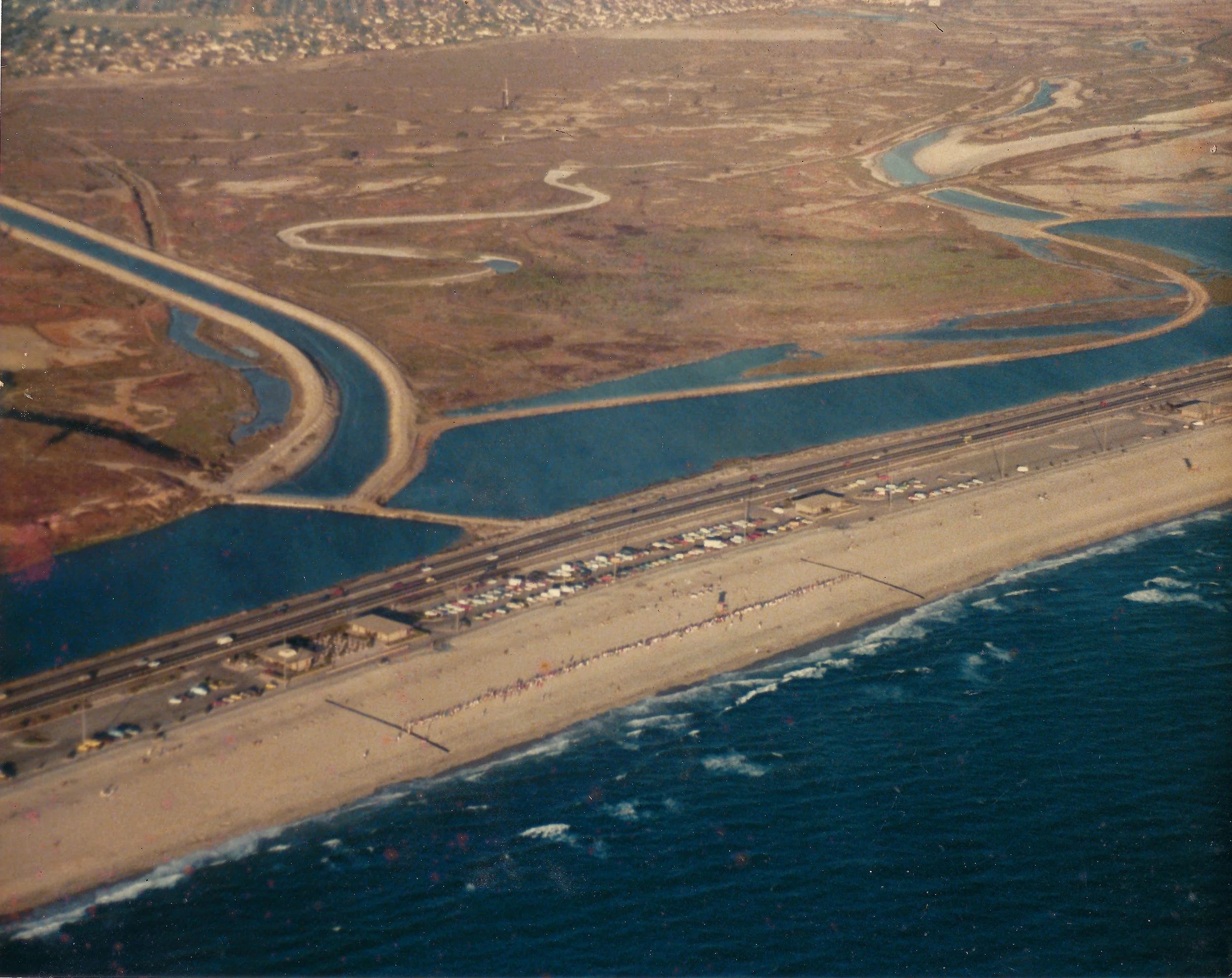
1985 - HANDS ACROSS THE SANDS was a demonstration that the Amigos held on Bolsa Chica State Beach to show to the public the size of the proposed navigable inlet intended to allow boats in and out of the proposed marina in the wetlands. Close to 1,000 volunteers came to the beach to stand hand-in-hand (hence the name "Hands Across the Sands") to show just how much beach would be taken out by the proposed navigable inlet. Amigos board members conveyed to the regional commanding officer of the US Army Corps of Engineers just how strongly the Amigos opposed the navigable inlet, and they used the photo to the left to show that we had broad community support. Within a few weeks, the Corps of Engineers announced that it would not support the navigable inlet, thus killing the marina proposal.
1987 - AMIGOS LAWSUIT AND THE CALIFORNIA SUPREME COURT - The Amigos waited four years for a hearing, and in 1987 the Supreme Court decided the case is not properly before them and refuse to hear it. Despite the financial burden, the Amigos Board of Directors decide to refile the case in Orange County Superior Court in 1987.
1988 November - BOLSA CHICA PLANNING COALITION FORMED - Supervisor Harriett Wieder and Huntington Beach Mayor John Erskine form the Bolsa Chica Planning Coalition to "prepare an alternative plan to the adopted county Bolsa Chica Land Use Plan for presentation to the County Board of Supervisors and other governmental agencies within 6 months of November 21, 1988." The five core members are Orange County, City of Huntington Beach, California State Lands Commission, Signal Landmark and Amigos de Bolsa Chica (represented by Shirley Dettloff and Adrienne Morrison). Support members include the Coastal Commission, Dept of Fish & Game, US Fish & Wildlife Service, EPA, Army Corps of Engineers, State Senator Bergeson's office, C.A.R.P., Shell Oil, Coastal Conservancy and others. Only alternatives having a non‑navigable channel will be studied. Joe Bodavitch is hired as Facilitator.
1989 May - COALITION CONCEPT PLAN - After 6 months of meetings to evaluate various alternatives, the Bolsa Chica Planning Coalition (BCPC) formulates the Coalition Plan: Wetlands/ESHA/Open Space of 1,105 acres with a minimum l,000 acres wetlands, no navigable entrance or marina or Huntington Harbour connection, no commercial development, and fewer homes than originally planned restricted to the Bolsa Chica Mesa. BCPC will continue meeting, develop the Wetlands Restoration Plan and form a non‑profit conservancy.
1989 July - PHILLIPS MOTION TO DISMISS AMIGOS LAWSUIT - In February, Phillips Oil asks the court to dismiss the Amigos case. In July Judge Rylersdam rules against Phillips’s motion. The Amigos case can now proceed to trial.
1989 August - AMIGOS MOTION FILED IN SUPERIOR COURT - Amigos file a motion against Signal and Phillips to declare the 1973 Land Trade unconstitutional because it violates California Constitution which prohibits conveyance of tidelands to private parties. They await trial.
1989 September - AMIGOS LAWSUIT SETTLED - The Amigos settles the lawsuit out of court since many of its goals were reached through the Coalition. An important part of the lawsuit’s settlement is that the Amigos cannot block housing developments on Bolsa Chica Mesa or 41 acres of degraded lowlands called the Fieldstone Property. The Amigos are confident that development will not happen as planned and that the lowland preservation and restoration is most critical.
1990s
1995 August - PORTS ANNOUNCE PLAN TO ACQUIRE THE BOLSA CHICA WETLANDS - Ports of Long Beach and Los Angeles, and seven other regulatory agencies agreed to acquire the Bolsa Chica Wetlands from Koll. Port funds will be used to restore the wetlands.
1996 February - CALIFORNIA COASTAL COMMISSION HEARS BOLSA CHICA PLANS - The Bolsa Chica Land Use Plan and Restoration Plan were heard before the California Coastal Commission with more than 10 hours of testimony. The Co. of Orange agreed to 55 modifications and rejected 33. The Amigos Board of Directors conclude that County plans fulfill their long-standing goal of acquisition and restoration of Bolsa Chica Wetlands.
1996 September - CALIFORNIA STATE COASTAL CONSERVANCY ACTS ON BOLSA CHICA - The Coastal Conservancy Board of Directors unanimously approved a plan to purchase 880 acres and partially restore the Bolsa Chica Lowlands. The plan must be approved by approximately 10 other local, state and federal agencies.
1997 February - STATE ACQUIRES 880 ACRES OF BOLSA CHICA LOWLANDS - The purchase, with funding from the ports of Los Angeles and Long Beach, now brings public ownership of Bolsa Chica lowlands to approximately 1200 acres. Out of a total of about $78 million, $25 million went to the purchase, leaving about $53 million plus interest earned plus funds from other sources for restoration.
1997 May - BOLSA CHICA RESTORATION STEERING COMMITTEE FORMED - Eight state and federal agencies will oversee the restoration of the Bolsa Chica lowlands: California Department of Fish and Game, California State Lands Commission, California Coastal Conservancy, California Resources Agency, U. S. Fish and Wildlife Service, U. S. Army Corps of Engineers, National Marine Fisheries Service, and the EPA. During the following months, a total of five public meetings are conducted in Huntington Beach to discuss restoration plans.
1999 - April SAN DIEGO JUDGE RULES IN FAVOR OF LAWSUIT PROTECTING BOLSA CHICA - Filed by the Bolsa Chica Land Trust, the Sierra Club, the Surfrider Foundation, Huntington Beach Tomorrow and the Shoshone Gabrieleño Nation, the suit claimed the Coastal Commission erred in approving development in the Bolsa Chica Wetlands, allowing Warner Pond to be filled, and approving the moving of the eucalyptus ESHA to the Huntington Mesa, and San Diego Judge Judith McConnell agreed.
1999 - APPEALS COURT UPHOLDS SAN DIEGO COURT DECISION AND ORDERS BOLSA CHICA LCP BACK TO THE COASTAL COMMISSION - In agreeing with the earlier decision by San Diego Judge Judith McConnell, the appeals court order directs a new hearing on development in the Bolsa Chica. The decision may have wide impact on development in wetlands throughout the state.
2000s
2000 August - THE DRAFT ENVIRONMENTAL IMPACT REPORT FOR BOLSA CHICA LOWLANDS RESTORATION IS RELEASED FOR PUBLIC COMMENT - The document of over 1,200 pages proposes 566 acres to be restored with tidal influence from a direct opening to the sea.
2000 November - COASTAL COMMISSION CONSIDERS BOLSA CHICA MESA DEVELOPMENT - The commission staff recommends that no development be permitted on the lower bench of the Bolsa Chica Mesa. The commission concurred. Signal/Hearthside subsequently filed a lawsuit contesting the commission's findings.
2001 August - COASTAL COMMISSION HEARS WETLANDS RESTORATION PLAN - Plan for the restoration of 566 acres of Bolsa Chica wetlands was presented by U. S. Fish and Wildlife Service. Due to the plan's complexity, the commission postponed any action on the plan until a later meeting.
2001 August - SIGNAL/HEARTHSIDE FILES DEVELOPMENT PLANS WITH THE COUNTY FOR THE UPPER BENCH OF BOLSA CHICA MESA - The proposal calls for 387 homes on 105 acres.
2004 October - GROUNDBREAKING FOR BOLSA CHICA RESTORATION - Officiated by Lt. Governor Cruz Bustamonte; Cathy Green, HB Mayor; Rodney McInnis, NOAA; Lynn Scarlet, Assistant Secretary, Dept. of Interior; Steve Westley, State Controller; Mike Chrisman, Director, State Dept. of Resources; Col. Leonardo Flores, Dep. Commander, US Army Corps or Engineers. In November, Aera Energy completed the abandonment of 61 oil wells and removal of all infrastructure, including 121,454 feet of surface piping, 2,754 tons of concrete rubble, 10,302 pipe supports and 73,542 feet of sub-surface piping to make way for the restoration project.
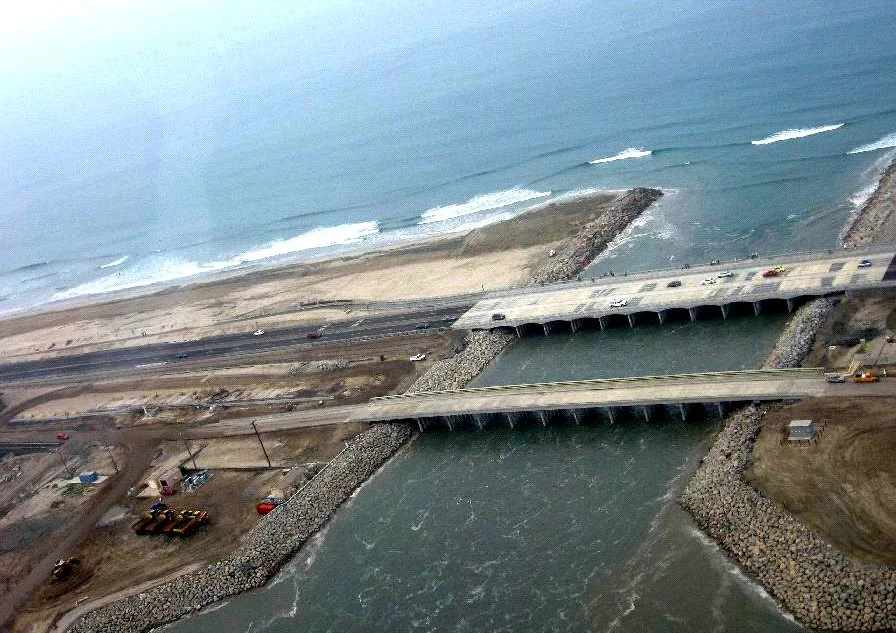
2006 August - NEWLY CONSTRUCTED TIDAL INLET OPENS - Crews worked through the early morning hours of August 24 during the low tide to remove the sand dam that stood between the ocean and the Bolsa Chica Lowlands Restoration Project area. At 6:00 am, for the first time in 107 years, the tide was once again flowing into parts of the Bolsa Chica wetlands that had been cut off from the ocean in 1899. It was an historic occasion for Amigos de Bolsa Chica who worked for over 30 years to acquire, preserve and restore the wetlands. Amigos, Steering Committee members and many others gathered along the bridge over the inlet to watch. The momentous occasion was commemorated with a champagne toast.
2012 October - SHEA/PARKSIDE PROJECT APPROVED BY COASTAL COMMISSION - On a vote of 6-2, the California Coastal Commission reviewed and approved Shea Homes’ proposed residential development known as Parkside to build 111 houses on 26.7 acres of the approximately 50-acre parcel that is off Graham Street, known as The Bean Field by Huntington Beach old-timers. The Amigos had sent a letter to the Commission repeating the long-standing vision of considering the entire parcel as part of the Bolsa Chica wetland ecosystem to be left as open space.