The FLOW Experience
Background
At first, the idea of volunteering felt unfamiliar to me. I had been in internships, part-time jobs, and undergraduate research, but beyond that, I had never actively sought out volunteer opportunities on my own, especially those outside of UCI. That changed when I joined College Corp at UC Irvine and was placed at my community host site: Amigos de Bolsa Chica located in Huntington Beach, about a half hour drive from campus.
I remember feeling nervous walking in for the first time. Nonprofit spaces always seemed like a close-knit community, and I was worried about finding my place. But from the moment I arrived, Amigos de Bolsa Chica’s staff and volunteers welcomed me with open arms. John Carter was one of the first volunteers I met, who was more than happy to share his knowledge and lend support. Annie Daw - the Programs Manager - is charismatic and easygoing, while Tom Anderson - our Executive Director - is both knowledgeable and kind, and of course, Erika Moe - our social media manager - brings so much energy and humor to the team. Each one of them shapes Amigos de Bolsa Chica, making it a comfortable and welcoming space for all new volunteers. Being surrounded by such passionate individuals has helped strengthen me not only as a student, but as an emerging scientist. It also sparked a curiosity within me, one that pushed me to learn more about our wetlands and microscopic phytoplankton that produce an estimated 50% of the air we breathe.
Coming in as a fourth year in Environmental Science and Policy, I thought I had explored most areas of environmental work. I participated in oak monitoring, studied fuel modification zones, and even presented my own research to an audience of over 100 professionals. It wasn’t until after my first day at Amigos de Bolsa Chica that I realized that there is a whole other world out there. While I had focused heavily on the terrestrial ecosystems, I had unintentionally turned my back on the other 70% of our planet, the ocean. I knew I wanted to expand my experience and knowledge into aquatic systems, and Amigos de Bolsa Chica gave me that opportunity through their fellowship and mission to protect our marine and wetland environments.
On October 10, 2025, I attended my very first day of service, and despite learning about phytoplankton in class, nothing compared to seeing them in person and directly under a microscope. After Annie set up the microscope, she mentioned it was a “good sample.” Not knowing what she was referring to, I took a look for myself. Leaning in through the lens, phytoplankton of all shapes and sizes filled the view, and some zooplankton were zooming past my field of vision every so often. I remember Annie pointing out all these different species like “Ditylum”, “Pseudo-nitzchia”, “Rhynozosolenia”, “Prorocentrum”, and “Lingulodinium” and I had no idea to which she was referring to, but I was even more curious to learn. I remember leaving for the day and in the car ride back to UCI, I kept reflecting back on that view of the microscopes, eager to be able to identify all these organisms.
What is FLOW?
Amigos de Bolsa Chica is a non-profit organization that focuses heavily on community science and safeguarding our local marine and wetland ecosystems. To put the mission into action, a program called Follow and Learn about Oceans and Wetlands (FLOW) was developed in 2013. FLOW is a free, all-ages community science program hosted by Amigos every Friday. FLOW volunteers also host Field Trips for local schools and groups where students are able to participate and conduct their own research and observations on that day’s water sample and wetland sightings.
What does a typical FLOW Friday look like?
Each FLOW Friday, we all meet at the Bolsa Chica State Beach Visitor Center in Huntington Beach. From there, we set up microscopes, and prepare our water quality station. Annie and John usually have the FLOW backpack ready to go before we head out to the collection site, which is at the Tidal Inlet Channel and is about a 5-minute drive. With our gear, we have our water quality data sheet, thermometer, refractometer (which checks salinity levels!), a towel, distilled water to rinse our tools, and our plankton tow net with a mesh size of 20 micrometers. This is what allows us to capture any phytoplankton floating with the current.
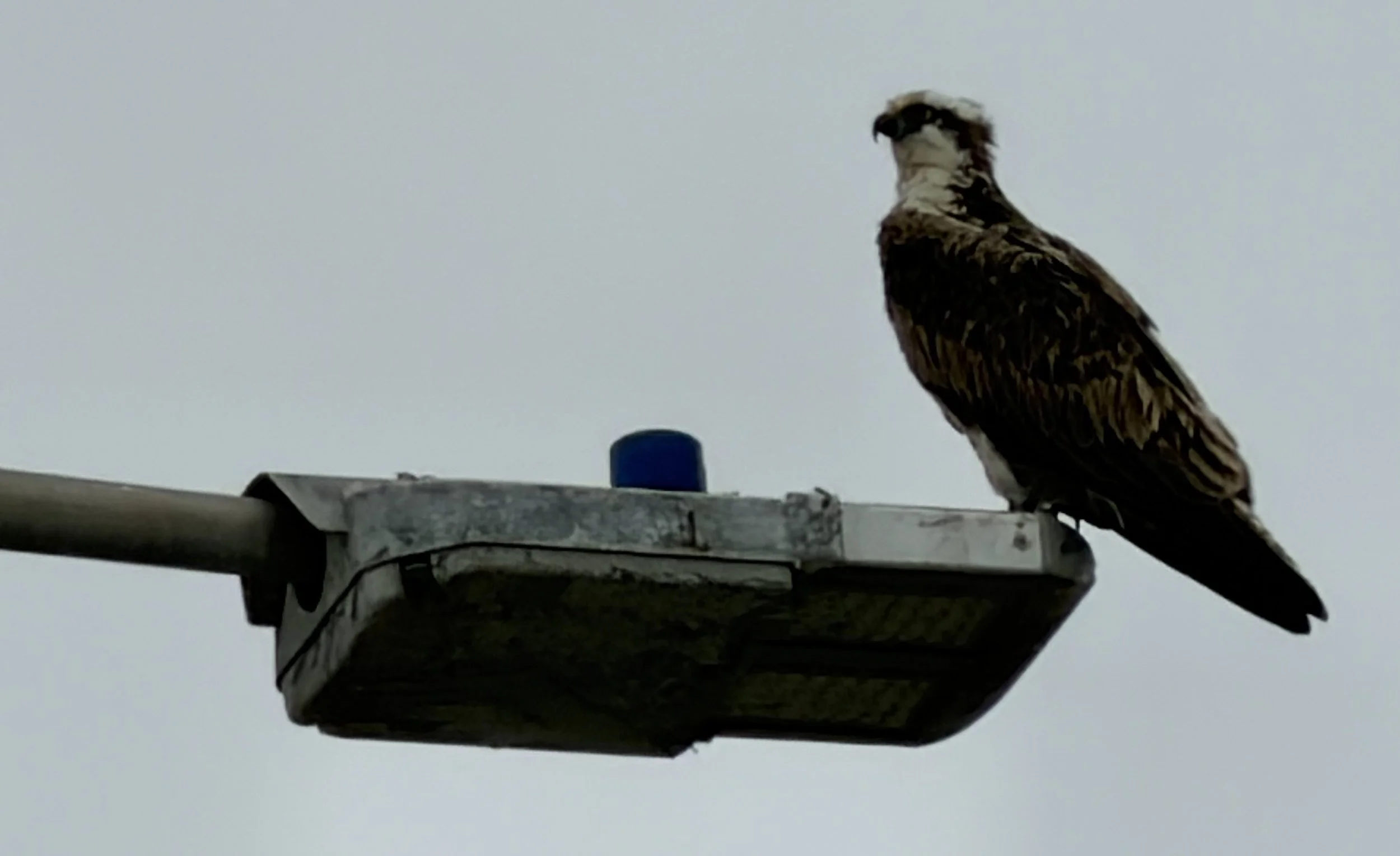
Osprey sitting on a light post, spotted during our FLOW sample collection.
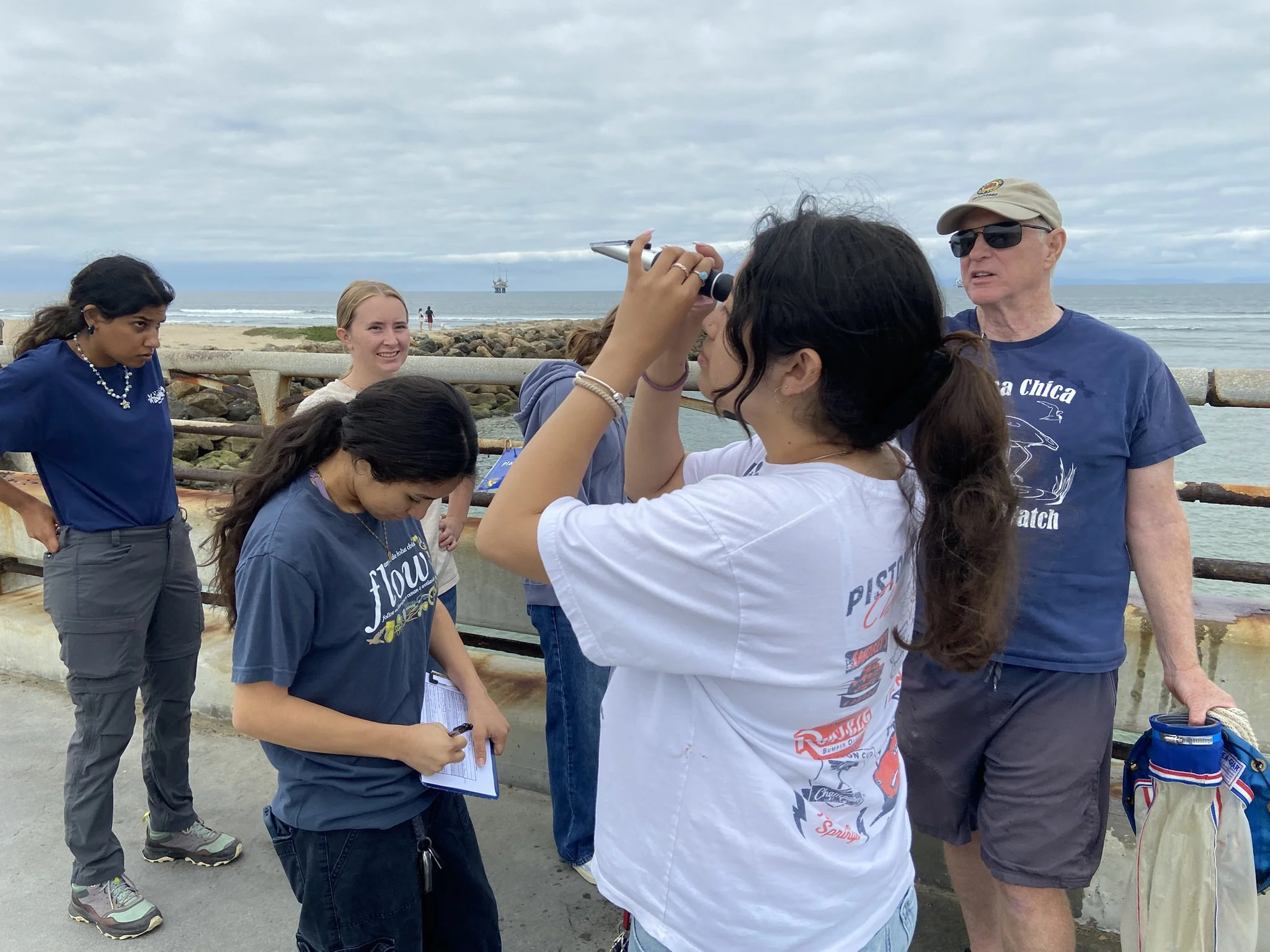
We use a refractometer to measure salinity after retrieving the water sample.
On multiple occasions, we encountered our friendly neighborhood Osprey eating fish on the light post. This Osprey has a nest nearby in the Bolsa Chica Ecological Reserve and is my favorite bird of prey species. John always carries a pair of binoculars so we have a pretty good view of any wildlife we spot! We also like to observe the brown pelicans, long-bill curlews, great egrets, and many other species hanging out in the Tidal Inlet Channel. Encountering local wildlife is one of my favorite highlights of each day!
After it is securely tied to the bridge, a lucky volunteer gets to toss the plankton tow net over the bridge and into the water. We let the tide pull water through the net for about 10 minutes to capture our water sample of the day. During this time, we record environmental conditions such as the time, weather, and incoming, outgoing, or slack tide. After 10 minutes, we pull the net back up, record the rest of the environmental conditions - temperature (which we want to do rather quickly to ensure the best accuracy) and salinity (using a refractometer) - and then we rinse the net to remove any hints of sand and salt before heading back to the visitor center.
Back inside the visitor center, we each take a seat, grab a data sheet, and begin observing. With one drop of water comes an entire microscopic ecosystem! Every Friday there is always something new to see, and we will never know what is in our sample until we get a look in the microscopes.
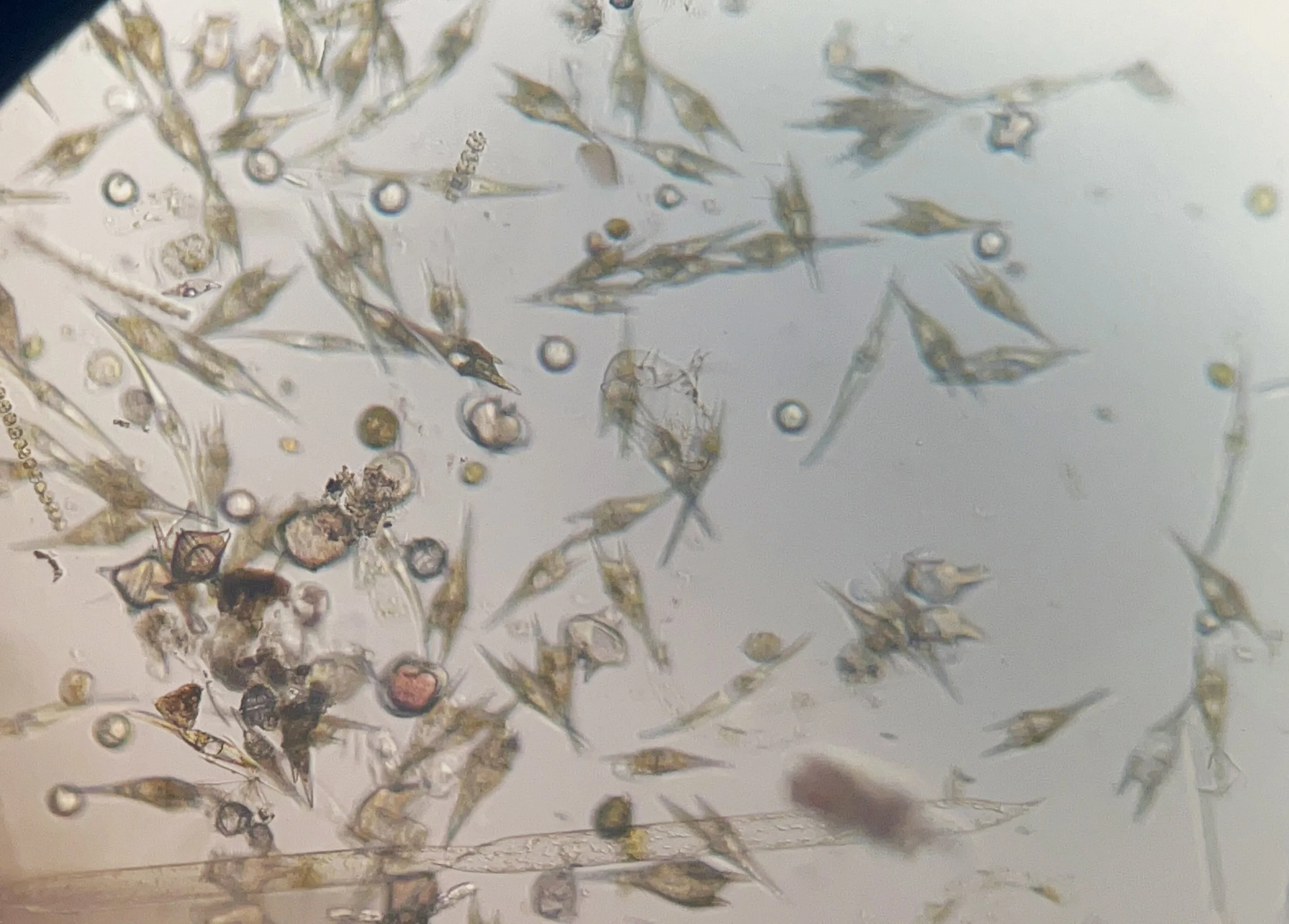
Microscopic view of several types of dinoflagellates and diatoms
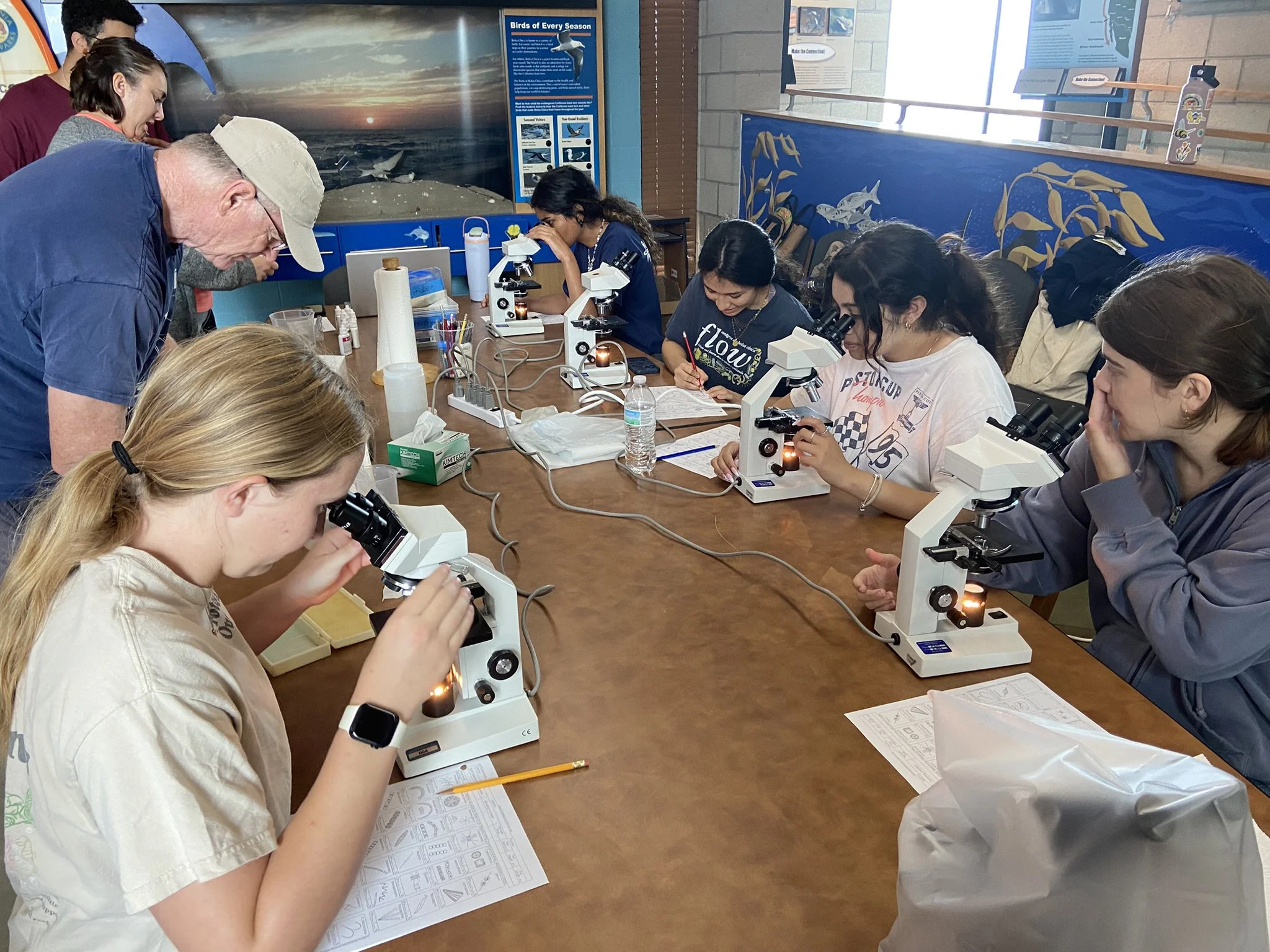
Group of volunteers doing microscopy at FLOW (6/19/26)
The importance of FLOW data
Monitoring our oceans is crucial in understanding how our climate is changing, and how it is affecting our coastal communities and marine wildlife. The primary purpose of FLOW is to aid the monitoring of harmful algal bloom (HAB) species because they can cause harm to wildlife and humans. When these toxins are found in our seafood, it raises serious public health concerns and risks.
For example, domoic acid is produced by pseudo-nitzchia, a well known HAB species. Domoic acid is a neurotoxin and can lead to Amnesic Shellfish Poisoning (ASP). This is because the domoic acid can concentrate in high levels within crustaceans, fish, and shellfish. FLOW plays a vital role in the monitoring efforts in California to prevent human sickness from harmful algal blooms and to raise awareness about water quality and public safety.
Each week, our water sample gets sent to the California Department of Public Health where they do further analysis to add into their own phytoplankton monitoring program database:
Additionally, we keep our own records of what plankton species are observed and of the water chemistry conditions; after 13 years, we have documented more than 1,000 data sheets on both water quality and phytoplankton presence. With our own data, we are able to analyze and explore research questions such as -
Are there any correlation between phytoplankton species and seasons?
What conditions make which species bloom?
What time of the year have we seen any high nitrogen levels? Ammonia levels? Phosphorus?
All of these research questions stem from curiosity and eagerness to learn and understand our natural world more.
FLOW Field Trips
Becoming an official Volunteer Naturalist gave me the opportunity to be more hands-on with FLOW Field Trips. FLOW Field Trips are designed to accommodate visiting classes. While FLOW Field Trips are aimed primarily at middle and high school students, they can be adapted for both elementary school and college students. Field Trips are a fun and educational activity where we set up 4 stations for the students: wetland tour, plankton tow, water chemistry, and microscopy. These field trips are split between the Bolsa Chica Ecological Reserve, where mini-wetland tours are conducted, and the Bolsa Chica State Beach Visitor Center, where the water quality analysis and microscopy are done.
I’ve enjoyed leading the wetland tour, water chemistry, and microscopy stations. I recently led the Wetland Tour with another College Corps Fellow, Eva Gonzalez; the highlight of this experience was when the students had the opportunity to see both California least tern and Western snowy plover baby chicks. Many of the students even shared that their new favorite bird is the Western snowy plover after that trip.
For the Water Chemistry station, I’ve explored different approaches to teaching children of all ages about the different measurements needed to ensure safe ocean levels, including pH, Nitrite, Nitrate, Phosphorus, and Ammonia. We emphasize the importance of pH levels: what acidity and basic means, the neutral levels the fishes enjoy, what happens when ocean pH levels change, and what every student can do to help.
At the plankton microscopy station, I especially enjoyed getting to meet Spanish speaking students, and I was able to help translate and show them how to find phytoplankton. Every time a student can successfully identify plankton, it feels very fulfilling and rewarding!
FLOW and Junior Rangers
Junior Rangers is a summer program with California State Parks. The Amigos de Bolsa Chica is a collaborator at Bolsa Chica State Beach and contributes to the Junior Rangers program with a modified version of FLOW. Every Friday during July and August, FLOW volunteers gather at the RV Campground from 3:00-4:00pm. Kids of all ages are invited and encouraged to participate, and they will earn a badge in the process!
After helping with Junior Rangers just once, I learned how much of a community-building activity it can be! One camper came by to help us set-up and started singing and dancing with the kids while they did the chemistry tests. I got to stretch my brain a bit and had to come up with fun ways to keep the kids engaged with the scientific topics. Trying to explain the nitrogen cycle to a nine-year-old takes a lot of creativity but in the end, it was super fun! We had a total of 18 kids in one afternoon, and all of them gained a unique and valuable experience at the beach.
FLOW at outreach events
We also bring FLOW to several public outreach events throughout the year. This is where many of my friends got to hear a little more about what I do here with the Amigos de Bolsa Chica. During the first Saturday of each month, the Amigos hosts free public tours at the Bolsa Chica Ecological Reserve from 9:00 to 10:30 am. There is a FLOW table right at the entrance to the footbridge (where the tours start). We have our table set up with the microscopes ready for anyone to come take a closer look at the sample we have collected the day before. In fact, if you have been to Bolsa Chica recently, you might have seen me running this station.
Amigos participates in many booth events throughout the year, and FLOW is always a popular draw to our tables. I participated in two main events for Amigos de Bolsa Chica. The first being the Earth Day Crawl on April 26, 2026, we collaborated with the Bolsa Chica Conservancy (BCC), and had our FLOW microscopes set up with a recent ocean water sample and phytoplankton ID guides.
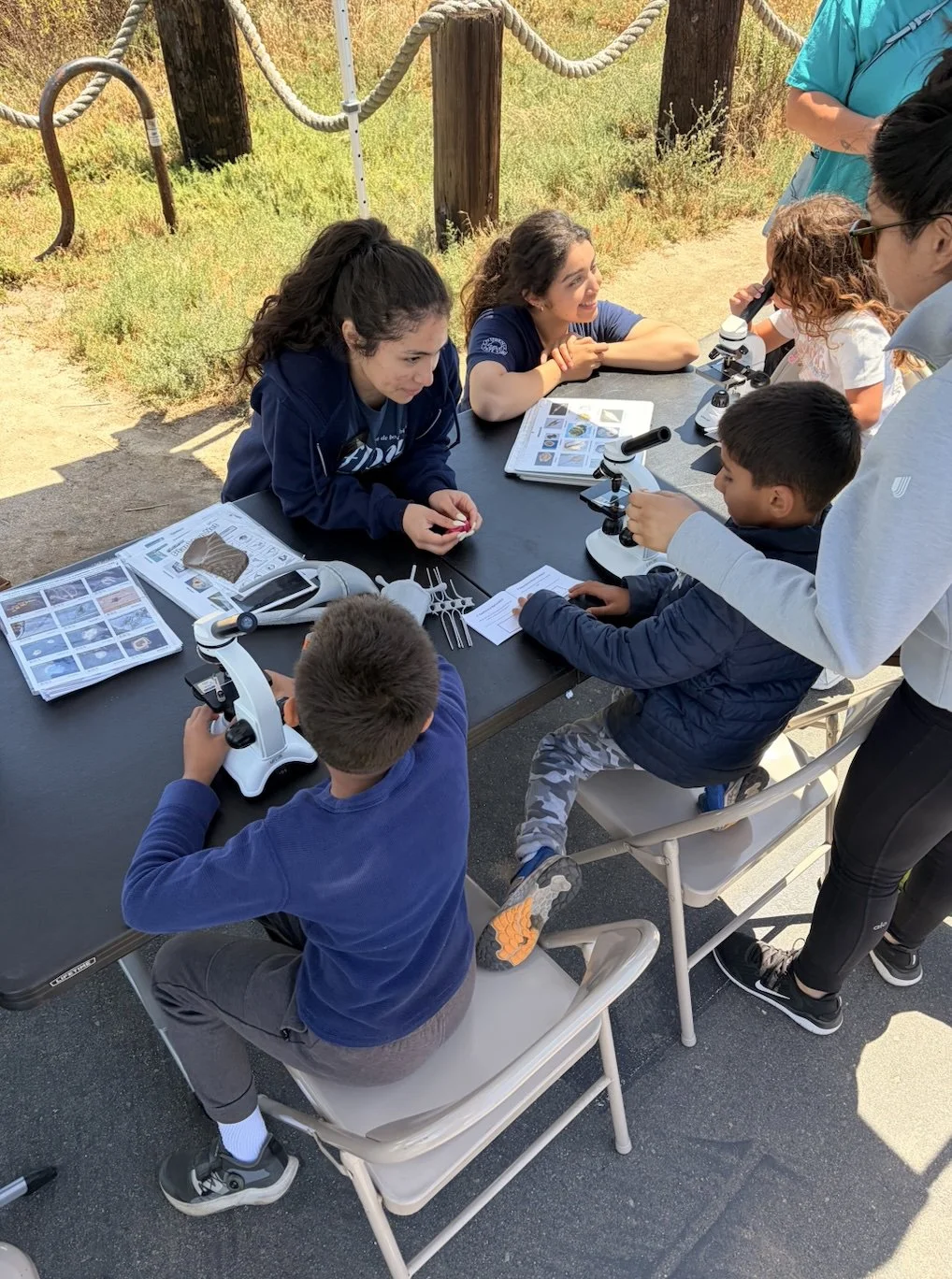
FLOW at the April 2026 Earth Day Crawl event.
My favorite part of this event was interacting with the children. Being able to translate these complex scientific terms into ways they are able to digest and think about is cool - it is a win for me! The kids all had a booklet to fill out, and our question was “What is the percentage of Earth’s oxygen is created by phytoplankton?” A lot of kids, and adults alike, were shocked to hear that approximately 50% of our oxygen is created by these microscopic plankton via photosynthesis. Many of them had no idea and it always brings about an interesting conversation afterwards. Seeing their “aha!” moment is the most exciting and fulfilling part of being a volunteer.
The other event I attended was Sustainaval, which is a festival hosted by UCI’s Sustainable Resource Center, where students get to meet non-profit organizations who take on climate action and offer environmental education and environmental stewardship. I had volunteered on behalf of College Corps to monitor and supervise the movement of students for Sustainaval, however, during a short break, I had the chance to walk around and to my surprise, I immediately caught sight of the Amigos! Annie, Erika, and John were all present during this event to promote our FLOW Friday events to interested students and volunteers.
At the Amigos table, in addition to microscopes, we also bring a whale vertebrae from a Grey whale that washed up at the Bolsa Chica State Beach. We love to share this with the public and use it as a scale representation for our FLOW events where they can take a look at both the microscopic phytoplankton and a bone from the largest mammal in the oceans.
Education outreach is a prominent goal we aim to strive for. We believe in the importance of developing environmental stewards through environmental awareness, hands-on learning, and making it as accessible and inclusive as possible.
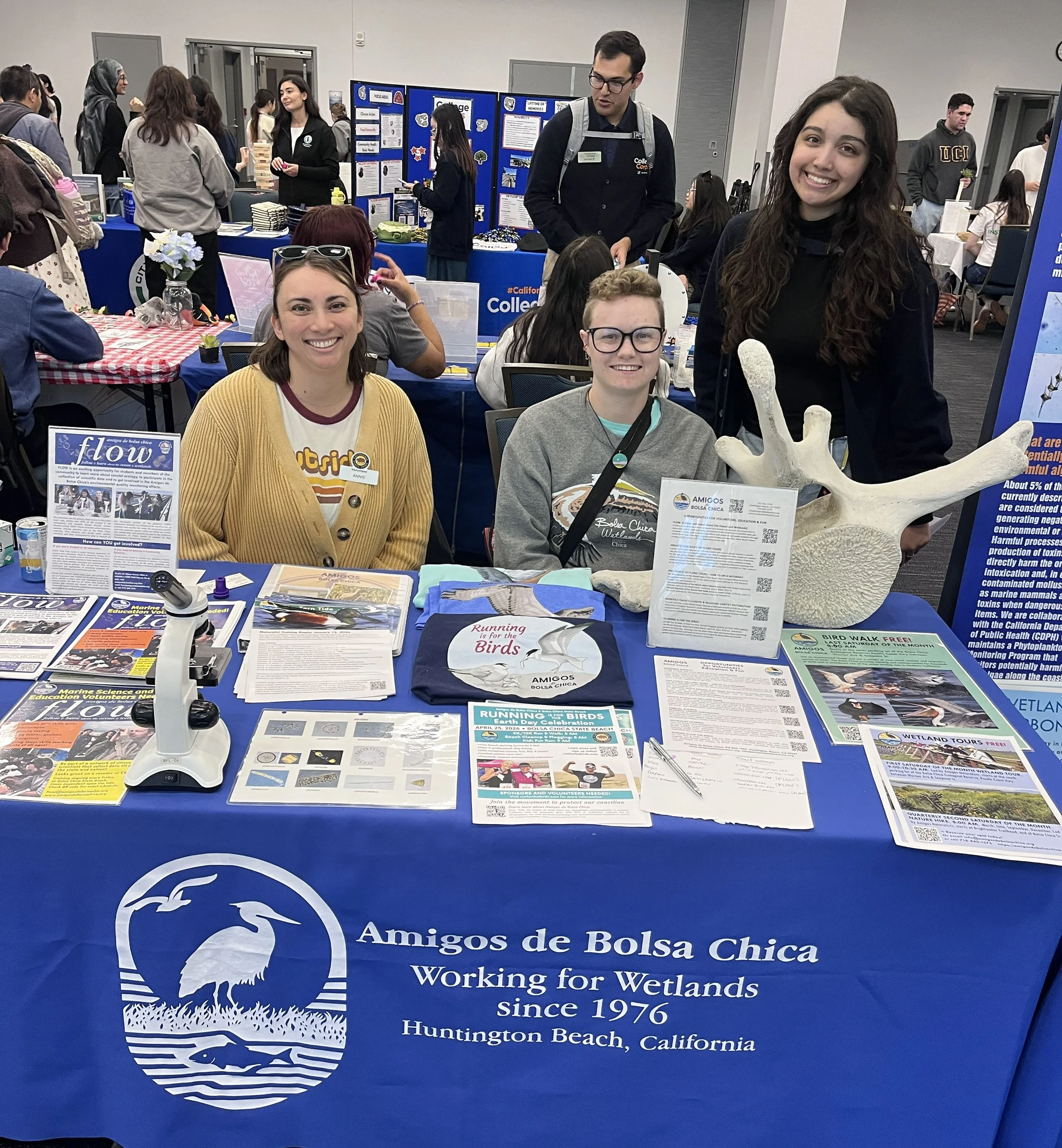
The Amigos bring FLOW to the 2026 UCI Sustainaval.
What are my takeaways?
My experience with FLOW Fridays has completely reshaped how I see the natural world. It has shown me that there is always something more to understand about our surroundings. As someone who was born and raised in Southeast Los Angeles, I’m grateful I had the opportunity of volunteering here with Amigos de Bolsa Chica. The FLOW Program has shown me that curiosity and passion to learn is all I need to push myself out of my comfort zone. As a student, this program has also reminded me that science is not just taught in classrooms or in confined labs, but also something we can actively participate in as a community. I have come to learn and see firsthand how these field trips shape students' minds and expand their lived experience, how FLOW offers opportunities to many students, and how events like Earth Day can be celebrated with others that share the same values and want to celebrate that.
I am glad I was given the opportunity to become an Amigos de Bolsa Chica volunteer and can’t wait to see what comes next.
Interested in participating?
Check out our calendar for upcoming events: https://amigosdebolsachica.charityproud.org/VolunteerRegistration/Calendar
I wholeheartedly hope to see you soon because this can be your experience too. D